
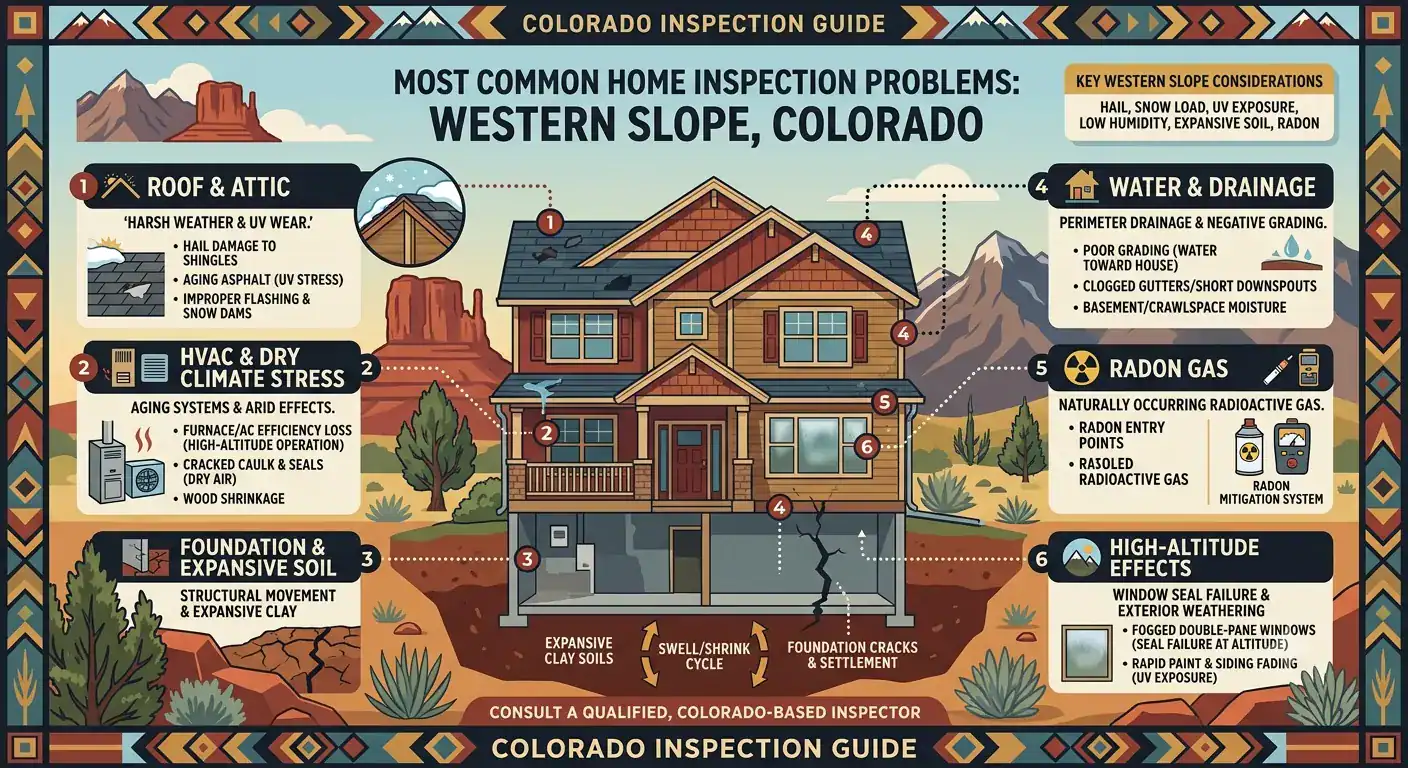
The slope and drainage around a home on the Western Slope are often the silent culprits behind hidden foundation and moisture problems. When water pools against the foundation — thanks to steep terrain or poor grading — it doesn’t just risk damp basements; it quietly stresses the entire structure, sometimes even inviting mold or rot before you spot visible damage.
Soils in Western Colorado can shift, settle, or expand with moisture, and without the right drainage design, even newer homes may face cracking, sticking doors, or warped floors. Proactive inspection of grading, guttering, and downspouts helps protect against these issues. Homes with mixed wood and concrete, common in this region, can be especially vulnerable at the points where materials meet, making routine checks for softness or discoloration crucial.
A skilled inspector will look beyond the basics: checking how hillside water moves, scanning for signs of slow leaks, and considering the unique soil and weather patterns that make the Western Slope different from other Colorado regions. For buyers and sellers alike, investing in a thorough inspection, asking pointed questions about drainage, and planning for needed maintenance can reveal problems early — before they turn into major repair bills.
Common Questions from Western Colorado Buyers and Sellers
Do I really need a home inspection if the house looks well-maintained?
Yes. A clean, updated home can still have hidden issues behind walls, beneath crawl spaces, or in the attic. A professional inspection can uncover structural concerns, electrical hazards, plumbing leaks, roofing problems, HVAC issues, and other defects that aren’t visible during a showing.
What are the most common home inspection problems on the Western Slope?
Every property is different, but inspectors frequently identify:
- Aging or damaged roofs
- Foundation settlement or cracking
- Deferred maintenance
- Plumbing leaks
- Outdated electrical panels or wiring
- HVAC systems nearing the end of their lifespan
- Improper grading and drainage
- Irrigation system issues
- Crawl space moisture
- Deck or railing safety concerns
- Missing GFCI outlets
- Window seal failures
- Garage door safety issues
Many of these items are repairable, but it’s better to discover them before closing than afterward.
Are inspection issues a reason to walk away from a home?
Not necessarily. Nearly every home inspection uncovers something. The key question is whether the issues are cosmetic, maintenance-related, or major structural or safety concerns — knowing the difference between a fixable issue and a serious red flag matters. Your Realtor can help you evaluate the findings and determine whether repairs, credits, or price adjustments make sense.
Can a seller refuse to make repairs?
Yes. In Colorado, sellers are generally not required to make repairs simply because an inspection identifies problems. Instead, buyers and sellers negotiate. The seller may agree to complete repairs, offer a credit, reduce the purchase price, or decline to make changes.
Should I attend the home inspection?
Absolutely — but near the end of the inspection so the inspector can finish his work. Attending gives you the opportunity to ask questions, understand how the home’s systems operate, and learn about routine maintenance. Most inspectors are happy to explain their findings and point out areas that deserve attention.
How long does a typical home inspection take?
Most inspections take between two and four hours, depending on the size, age, and condition of the property. Larger homes, properties with shops or outbuildings, and rural properties often require additional time.
Does a home inspection include mold, radon, sewer lines, or well water testing?
Usually not as part of a standard inspection. These specialized inspections are often available for an additional fee and may be recommended depending on the property’s location and characteristics. Rural properties on the Western Slope may also require inspections of wells, septic systems, irrigation equipment, or water rights infrastructure.
What hidden problems should buyers watch for in older homes?
Older homes can have tremendous character, but buyers should pay close attention to:
- Original plumbing or electrical systems
- Foundation movement
- Roof age
- Insulation levels
- Single-pane windows
- Asbestos-containing materials
- Lead-based paint (in older homes)
- Aging furnaces and water heaters
An experienced inspector can help identify which issues are routine and which deserve closer evaluation.
Should I worry about cracks in the foundation?
Not every crack indicates a serious problem. Small shrinkage cracks are common, while wider or shifting cracks may warrant further evaluation by a structural professional. Your inspector can help distinguish between cosmetic issues and signs of structural movement. You can also request a foundation inspection from a local foundation engineer or expert.
What happens if the inspection finds expensive repairs?
Buyers generally have several options:
- Request repairs.
- Request a seller credit.
- Negotiate a lower purchase price.
- Accept the home as-is.
- Exercise inspection-related contract rights if an agreement can’t be reached.
The best option depends on the severity of the issue, market conditions, and your long-term plans.
Can a home pass or fail an inspection?
No. Home inspections are educational, not pass-or-fail tests. The inspector documents the home’s condition so buyers can make informed decisions. Even brand-new homes often have inspection items that should be addressed.
Should sellers get a pre-listing inspection?
In many cases, yes. A pre-listing inspection allows sellers to identify issues before putting the home on the market. Addressing problems early can reduce surprises during negotiations, build buyer confidence, and often result in a smoother transaction.
Are new construction homes inspection-free?
No. Even newly built homes can have defects ranging from minor cosmetic issues to significant installation problems. Many buyers choose to have independent inspections performed during construction and before closing.
Are rural properties on the Western Slope inspected differently?
Often, yes. Rural properties may include features that require additional evaluation, such as:
- Septic systems
- Private wells
- Irrigation pumps and piping
- Water shares or delivery systems
- Barns and outbuildings
- Detached workshops
- Acreage fencing
- Livestock facilities
These components can have significant maintenance and replacement costs, making specialized inspections especially valuable.
What’s the biggest mistake buyers make during the inspection period?
Focusing on a long list of minor cosmetic items instead of understanding the home’s major systems. Every home has imperfections. The most important concerns are structural integrity, roof condition, electrical safety, plumbing, HVAC performance, drainage, and overall maintenance.
Final Thoughts
A home inspection isn’t about finding the “perfect” house — it’s about understanding the home you’re buying. The more information you have before closing, the more confident you’ll feel in your investment. Whether you’re purchasing a home in Grand Junction, Fruita, Palisade, Clifton, Delta, Montrose, Rifle, or elsewhere on Colorado’s Western Slope, a thorough inspection can help you avoid unexpected expenses and negotiate from a position of knowledge.
The inspection process doesn’t have to be overwhelming. With the right guidance, you’ll know which findings deserve attention, which are routine, and how to navigate negotiations with confidence. If you’re thinking about making a move or want your home evaluated for hidden risks, let’s connect to make sure your next step is on solid ground.
Carol & Ris Cowan — Cowan Home Team | Century 21 CapRock Real Estate
📞 (970) 462-7316
📧 ris@cowanhometeam.com
🌐 cowanhometeam.com
Serving buyers & sellers across Colorado’s Western Slope with knowledge you can count on.